

ACR-accredited · Reports within 24 hours · Se habla español

Get a detailed look at your heart’s structure and function with a non-invasive ultrasound examination.
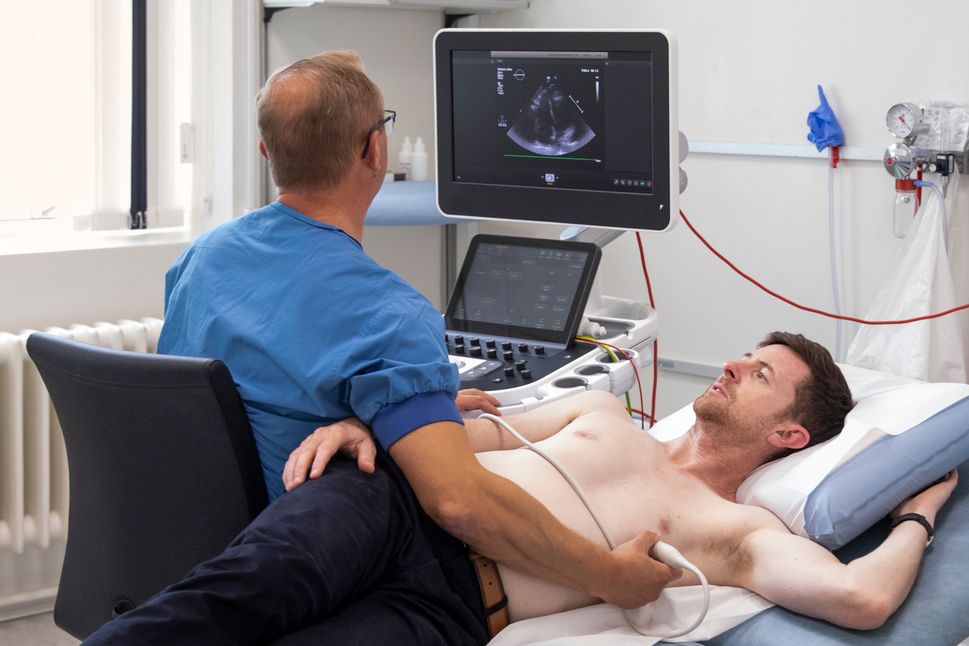
An echocardiogram, often called an “echo,” is an ultrasound of your heart. It uses sound waves, not radiation, to show your heart beating in real time: its chambers, its valves, how well it pumps and how blood flows through it. At Agile Medical Imaging in West New York, we offer both a standard echocardiogram and a stress echocardiogram, and your results are sent to your doctor in about 24 hours.
We’ll check your insurance and explain any preparation before your visit.
A standard echo is a simple, comfortable test. Here’s what to expect.
Your doctor sends the order to us, or you send it after you request an appointment. We check your insurance and handle any prior authorization.
You’ll change into a gown from the waist up and lie on a padded table, usually on your left side. Small sticky pads (electrodes) are placed on your chest to track your heartbeat.
The sonographer moves a small handheld device, called a transducer, with warm gel over your chest. You may hear the sound of blood flowing. That’s normal. Most echos take about 30 to 60 minutes.
A physician reviews your images, and the report typically reaches your doctor within 24 hours. Your doctor will go over the results with you.
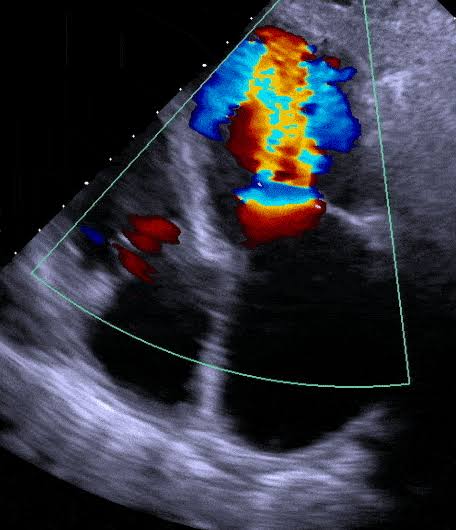
Because an echo shows your heart as it beats, your doctor can see how it’s working, not just how it looks. A Doppler part of the exam measures the speed and direction of blood flow, which helps show whether the valves open and close properly.
Your doctor may order an echocardiogram to look into:
A stress echocardiogram shows how your heart works when it’s working hard. Some heart problems, such as narrowed arteries that reduce blood flow to the heart muscle, only show up during exercise. A stress echo compares images of your heart at rest with images taken right after exercise.
Doctors often order a stress echo for chest pain or shortness of breath with activity, to check for coronary artery disease, or to see how well a known heart condition is responding to treatment.
● Don’t eat a heavy meal for a few hours before your test. We’ll give you the exact timing.
● Wear comfortable clothes and walking or athletic shoes.
● Ask your doctor whether to take your usual heart medications that day. Some may need to be paused before the test.
● Tell us if you have trouble walking or exercising.
You can eat, drink and take your usual medications as normal. For a stress echo, follow the preparation steps above. You can eat, drink and take your usual medications as normal. For a stress echo, follow the preparation steps above.
Wear a two-piece outfit, because you’ll change into a gown from the waist up. Avoid lotion or oil on your chest on the day of your test.
Your doctor’s order, photo ID, insurance card and a list of your heart medications. For a full checklist, see how to prepare.
Free on-site parking · Wheelchair accessible · Walk-in X-rays
An echocardiogram shows the size and shape of your heart, how well its chambers pump and how its valves open and close. With Doppler, it also measures how blood flows through the heart. Doctors use it to check for valve problems, heart failure, fluid around the heart and other conditions. Your doctor explains what your results mean.
A standard echocardiogram usually takes about 30 to 60 minutes. A stress echo takes longer, about an hour in total, because it includes resting images, exercise, images right after exercise and a short recovery. Plan a few extra minutes for check-in and changing into a gown.
A standard echo takes pictures of your heart while you rest. A stress echo takes pictures before and right after exercise, to show how your heart works under effort. Doctors use a stress echo to look for problems that only appear with activity, such as reduced blood flow to the heart muscle.
No. An EKG (electrocardiogram) records the electrical signals of your heart as lines on a strip. An echocardiogram uses ultrasound to create moving pictures of your heart’s structure and blood flow. Doctors often use both: the EKG shows heart rhythm, and the echo shows how the heart looks and pumps.
The cost depends on your insurance plan and whether your doctor orders a standard echo or a stress echo. Most insurance plans, including Medicare and Medicaid, cover an echocardiogram
when your doctor orders it as medically necessary. We verify your coverage before your visit. See insurance and costs or call (201) 350-7120 for a self-pay price.